
Doom Walkthrought
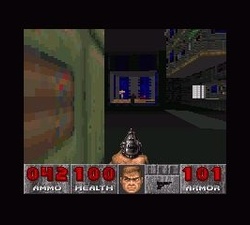
Let’s take it step by step. In Doom on the Super Nintendo, don’t sprint straight to the exit—this port rewards short loops and checking for fake walls. Right from the jump in Doom (SNES), pull the shotgun off a zombieman—it makes sprinting through the hangar a breeze. In the first area after the barrel hallway, peek into the nukage room with the skinny snake walkway: the green armor is obvious bait, but it’s not the real prize. Scan the walls—panels a shade off or missing bolts often slide open as a secret door. Inside you’ll find shells, guns, and medkits you’ll want for the next map, where the familiar blue key hunt kicks off.
Phobos: openers and early secrets
Early on, keycards set your route. On “Hangar” it’s straightforward: clear rooms in a loop and don’t ignore the slit windows where imps love to lob fire. On the next map, “Nuclear Plant,” the blue door leads to the heart of the level—don’t rush the nearest switch. Check the dark corners by the light panels: one wall slides, revealing a corridor with ammo and a medkit. You can snag the chaingun here—once you hear that telltale buzz, keep your sights on long angles; shotgunners love camping corners. If you hit the flicker maze, hug the right wall—fewer missed turns, and you’ll reach the blue key without doing laps of hell.
“Toxin Refinery” loves nukage gotchas: the yellow key sits in plain view, but grabbing it pops open ambush alcoves. Plant your back to a wall and greet them with the shotgun. Don’t run straight out with the key—there’s a UAC panel here with a slightly different pattern: behind it is a tunnel to the secret exit. Want “Military Base” (that classic secret level)? That’s the route. The automap is your friend—flip it on and look for places where rectangles “break” or rooms exist with no entrances. Those are your classic secret rooms; much easier to open by feel when you know where to press.
On “Phobos Anomaly,” Barons of Hell show up as a pair. Mind rocket splash off walls—self-damage stings worse than a Baron’s punch. Before the teleporter, check the side nooks: there’s often armor and meds, and blood marks safe lanes on the floor. A simple trick works here: kite the Barons around pillars so their fireballs tag concrete, then burn them down with shotgun and rockets in the gaps between volleys. When new platforms light up below, don’t panic—Doom loves “button” traps. Clear the perimeter first, then make your jumps.
Deimos: crates, teleporters, and “finding the way out”
The mid-campaign loves to misdirect. On the container-yard map, stick to the lower rows: there are half-crate cut-throughs with chaingun belts and sometimes a plasma rifle. To avoid circling, set mental landmarks: a cluster of tall green crates by a light pillar—turn there for the blue door. In Deimos labs, don’t dive into the first teleporter you see—there’s often a twin nearby that drops you on a balcony over the same room, perfect for picking off imps and hitting a switch without brawling on the floor. If you find a hall with two rows of pillars and a red key in the center, use the barrels: clip one edge and the chain reaction wipes half the room. Then grab the key and prep for a Spectre wave—armor up, gun ready; the lighting’s intentionally dim.
The Cyberdemon waits in the round arena of “Tower of Babel.” It’s fair play: big space, pillars, sparse medkits. How do you kill a Cyberdemon reliably? Don’t get greedy. Hold medium distance, orbit around columns, send rockets from cover and strafe immediately. It’s cleaner to finish with the plasma rifle when he “breaks” on corners. BFG9000 is for the confident: shoot a pillar in front of him and pop out so the orb detonates in his face and the tracer cone covers the target. Just not point-blank—the splash will ruin your day.
Hell: tight corridors and the final exam
Hell loves playing with light. Dark galleries with strobing are perfect Spectre territory. Before a turn, toss a single pistol shot into the black—if something’s skittering, it’ll give itself away. On altar-and-blood maps, keys often sit on “islands.” Before you grab the red key, clock your nearest “safe” niche. As soon as you take it, walls open around the edges and Lost Souls flood in. The chaingun pins them like a fan; the shotgun finishes. If a Cacodemon spawns, kite it to a doorway—its big orbs smash into the frame while you control range.
The final arena with the Spider Mastermind favors straight firing lanes, which is great for us: the chaingun and plasma “stagger” it with sustained fire. Don’t stand in the open—peek from a pillar; when your cells run dry, finish with the shotgun. Got a BFG? Same rule as with the Cyber: fire, half-step back into cover so the tracer cone chews off most of its health. And keep your head on a swivel: side rooms sometimes hide ammo and armor, and their entrances are fake walls with a pentagram.
Small things that save your sanity
In Doom (1993) on Super Nintendo, secrets aren’t random—they follow logic. Light panels, walls with different bolts, skinny gaps between columns—those aren’t “decor,” they’re hints. The automap makes it clear: if you see a void behind a wall, there’s almost certainly a passage. Don’t rush keycards: sometimes a blue door hides a plasma rifle while the lever that opens the path forward is tucked behind a red door; it’s smart to open the map’s “pockets” first, then grab the key and sprint a tight loop. And one more: teleporters on Deimos often come in pairs—one throws you into a blender, the other parks you on the balcony above it. Spotting the “right” one is easy: its frame is brighter, and it’s usually a little off-center in the room.
If you want to brush up on Doom’s fundamentals and map logic, swing by /gameplay/. And the lore on why Phobos is so grim—yeah, we already covered that in /history/. From there it’s all execution: map awareness, keys, switch discipline, and methodical room work. That’s how Doom on Super Nintendo really opens up—no panic, just confidence in every step.