
Doom story
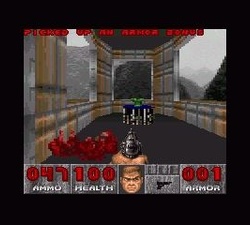
The story of DOOM on the Super Nintendo is one of those rare tales where stubbornness and imagination bulldoze common sense. Born on PC as a first-person shooter that shattered the mold and spread on floppy disks as shareware, DOOM was lightning in a bottle. id Software’s office crackled with youthful energy: John Carmack squeezed a new dimension out of silicon, John Romero lit the fuse with wild ideas, and Bobby Prince’s music drilled into your skull from the very first notes of At Doom’s Gate. So how do you cram that raging blend of Martian base hellscapes, blazing corridors, and meaty Cacodemons into a cozy living room on the Super Nintendo? Somehow, that’s exactly what happened—and it was DOOM on the SNES, no asterisks, no apologies.
From basements to the living room
Sculptured Software, under Williams Entertainment, took the leap to port DOOM to the Super Nintendo. The name most fans remember is Randy Linden. For a lot of “doomers,” he proved DOOM could play on SNES in a way that makes your palms sweat and your fingers instinctively reach for shoulder-button dodges and strafes. No splashy keynotes, no marketing fluff—just quiet engineering wizardry. They tucked the Super FX 2 enhancement chip into the cartridge, and the spell clicked: corridors swarmed with Imps, Barons of Hell, and the Cyberdemon, while Doomguy—the nameless space marine—kept pushing forward, gripping the shotgun like it’s the only reliable thing in the universe.
To the world, it felt like a dare. DOOM was the badge of PC bravado, a whispered password into teenage adulthood. On Super Nintendo it became a living-room ritual: slot in the red cart—yes, that iconic crimson shell you could spot from across the room—and drift through the UAC hallways. On screen: familiar level geometry, trimmed to the console’s limits. In the speakers: heavy tracks with a different tint—E1M1 still propels you, basslines clutch the heartbeat. So what if some corners got rounded and a texture or two got shaved—the attitude stayed. That’s the real reason people fell for console DOOM.
How it worked
The trick was not to wrestle the original, but to wrap its core with care. The level list was intentional, stitching the right rhythm—from those first steps on the base to hellish halls where your pulse locks to the shotgun’s thump. They cut the clutter to preserve that “keep moving forward” momentum. Cue the console flavor: passwords instead of saves, lean UI, clean gamepad navigation. The SNES pad fit like a glove—the D-pad pointed you toward danger, shoulders handled the strafe, face buttons barked fire. Not a carbon copy of the PC setup, but its own discipline—you adjust fast, then stop thinking and just act.
In the background of the big story, the word Jaguar hums: that version underpinned many console ports, SNES included. But the Super Nintendo build feels distinct. It was aimed at feel over spreadsheets: make DOOM feel like DOOM—goosebumps when a door hisses open and a glowing teleporter waits beyond. And when we say “16-bit port,” you can’t help but smile: they could bottle atmosphere in pixels so well that years later it snaps back the instant you start a new run.
How it spread
Landing on the Super Nintendo brought DOOM to folks parked by the TV, not the keyboard. In stores, the cartridge stood out by color—the unmistakable red shell begged to be grabbed. Players took it home and discovered that “retro shooter”—back then just “first-person shooter”—without fretting about platforms and labels. In the US and Europe, it became part of the SNES canon—a sturdy portal to Hell sitting shoulder to shoulder with platformers. It felt like DOOM was a rite of passage for any system: if a console could handle it, you trusted it. And here, it did—with swagger.
In Russia and nearby countries, DOOM wrote a different chapter. It first spilled out of computer clubs and stairwell “PC rooms,” but on Super Nintendo it found players raised on cartridges. A console folklore emerged: kitchen-table arguments over “the right way” to clear those Baron rooms, passwords neatly copied into notebooks so you could jump back in exactly where you stopped, and the word “Doom” sounding less like a title and more like a timestamp of an era. Some stayed with DOOM, others with Doomguy; “doomers” cemented itself in the slang, and “hell on Mars” became everyday shorthand.
Funny how the small cultural bits stick. Bobby Prince’s tracks on SNES are softer-edged, but they still land: At Doom’s Gate, The Imp’s Song—suddenly it’s the soundtrack of your own room, the console humming as the sky outside darkens. Pixelated blood, red keycards, blue armor—icons you don’t argue with. And even those who first met DOOM on the Super Nintendo later tried the PC original and said, “Yeah—that’s the one. That’s mine.” The port wasn’t “dumbed down,” just a different angle on a familiar legend—with the same pulse and bite.
Behind the curtain, there were quiet heroes. You walk a corridor and hear that familiar drone—somebody spent late nights wrangling deadlines and reshaping levels so they resonated with the SNES. Sculptured Software etched its name into the chronicle—the part where no one nitpicks “port” versus “remake,” they just remember that it worked. Williams Entertainment—the logo that flickered up before the plunge—now sparks a warm flash of memory: a sign that real DOOM is about to begin.
Looking back, it’s obvious why DOOM on SNES ages so gracefully. It brought home everything that makes DOOM timeless: certainty in your step, the cadence of the shotgun, the nerve to open doors that almost certainly hide trouble. The tale of this port isn’t about specs and numbers—it’s about grit and love. For a first-person shooter born at id Software to live on the Super Nintendo, someone had to believe in the impossible. They did. That’s why it stayed with us—like a red cartridge in your palm, like the first chord of E1M1, like the name Doomguy that tells you everything the second you hear it.